2023 Peter J. Dunn Award for Green Chemistry & Engineering Impact in the Pharmaceutical Industry
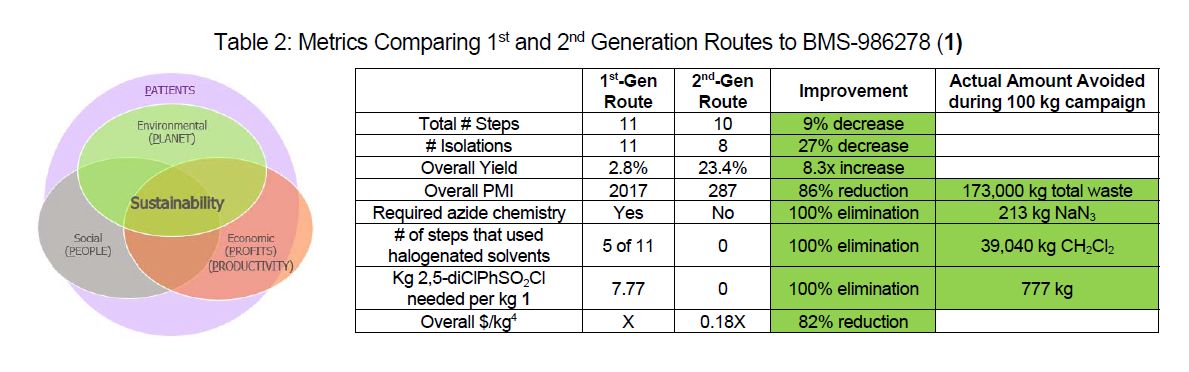
Bristol-Myers Squibb was awarded for the “Sustainable Manufacturing of BMS-986278 Leveraging an ERED/KRED Biocatalytic Cascade.” The BMS team’s work demonstrated the use of an ERED/KRED biocatalytic cascade to enable the efficient installation of two stereocenters on a cyclohexyl ring as well as other improvements leading to a reduced number of isolations, elimination of the use of halogenated solvents, reduction of overall Process Mass Intensity (PMI) by 86% from first to second generation, and reduction of projected raw material costs by 82%. BMS team members included Michael Smith, Yichen Tan, Candice Joe, David George, Michael Dummeldinger, Harshkumar Patel, Richard Fox, Shane McKenna, and two Codexis colleagues, Zara Seibel, and Stephan Jenne.
More about the Award
The Peter J. Dunn Award, established in 2016, recognizes outstanding industrial implementation of novel green chemistry and/or engineering in the pharmaceutical industry that demonstrates compelling environmental, safety, cost, and/or efficiency improvements over current technologies.
This annual award is presented at the Green Chemistry & Engineering Conference where a member of the winning team is invited to share their team’s innovations.
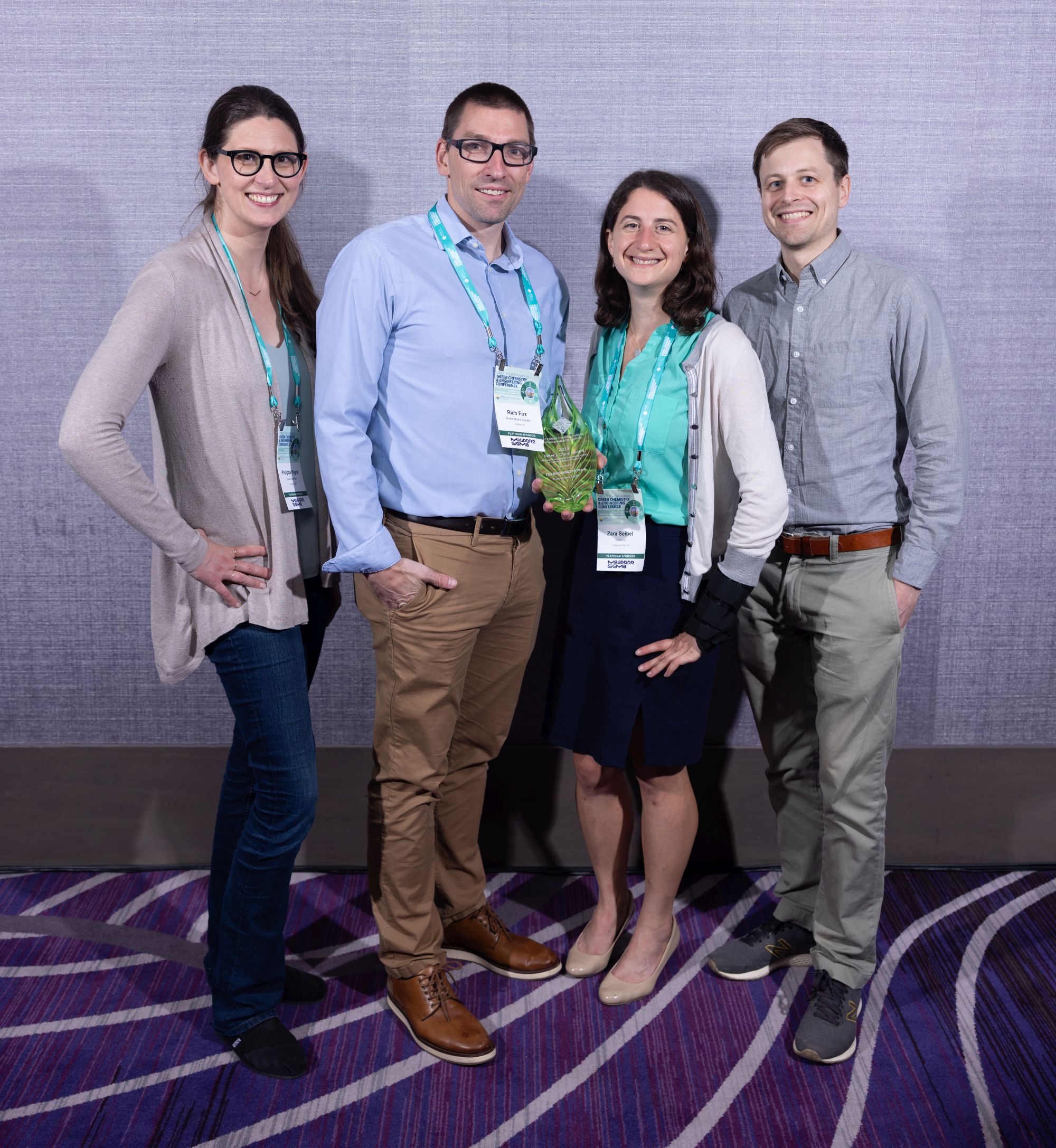
Pictured: Richard Fox, Scientific Director at BMS, accepts the 2023 Pete Dunn Award from ACS GCIPR 2023 Co-Chairs, Dan Bailey of Takeda (right) and Pippa Payne of Gilead (left). Also pictured is Zara Seibel, Senior Scientist at Codexis, part of the winning team.