Tag: Peter J. Dunn Award

From Bottleneck to Breakthrough: Developing a Sustainable and Scalable Manufacturing Process for a Complex ADC Drug-Linker

2025 Peter J. Dunn Award for Green Chemistry & Engineering Impact in the Pharmaceutical Industry

The Merck team, consisting of Patrick Fier, Patrick Moon, Scott McCann, Tao Liang, Greg Estrada, Marc Poirier, Reed Larson, Lu Wang, Gao Shang, and Fuh-Rong Tsay, received this award for their work, “From Bottleneck to Breakthrough: Developing a Sustainable and Scalable Manufacturing Process for a Complex ADC Drug-Linker”. They demonstrated the impact of applying green chemistry principles in the manufacturing process of the linker for the antibody-drug conjugate (ADC) Sacituzumab tirumotecan (MK-2870). Originally, the manufacturing process had long lead times due to the 20-step synthetic sequence and faced a major bottleneck with the final purification that limited production to less than 100 g per month even with 24/7 operation in a high-potency chromatography suite. Major improvements were achieved by developing a synthesis from a widely available natural product that cut seven potent steps down to three. The Process Mass Intensity (PMI) was reduced by approximately 75%, and the amount of energy-intensive chromatography time was decreased by >99% compared to the original route. This work highlights the advantages of investing in greener and more sustainable processes that naturally improve the global supply of medicines to patients.

Merck

More about the Award

The Peter J. Dunn Award, established in 2016, recognizes outstanding industrial implementation of novel green chemistry and/or engineering in the pharmaceutical industry that demonstrates compelling environmental, safety, cost, and/or efficiency improvements over current technologies.

This annual award is presented at the Green Chemistry & Engineering Conference, where presenters are invited to share their innovations. 

Continue reading

A Sustainably-Designed Manufacturing Process to Adavelt™ Active from Renewable Feedstocks.

2025 Peter J. Dunn Award for Green Chemistry & Engineering Impact in the Pharmaceutical Industry

Corteva

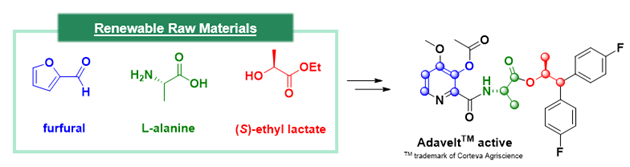
Corteva’s winning submission “A Sustainably-Designed Manufacturing Process to Adavelt™ Active from Renewable Feedstocks.” The Corteva team demonstrated the design of an efficient manufacturing process for Adavelt™ active, with sustainability as a core focus. They adopted green chemistry principles to maximize yield, reduce waste, and deliver a cost-effective solution for farmers. Building upon the first-generation supply route, they developed a process that eliminated three protecting groups, four steps, the use of precious metals, and replaced undesirable reagents with greener alternatives while producing an active ingredient effective against 20 diseases in over 30 crops.

More about the Award

The Peter J. Dunn Award, established in 2016, recognizes outstanding industrial implementation of novel green chemistry and/or engineering in the pharmaceutical industry that demonstrates compelling environmental, safety, cost, and/or efficiency improvements over current technologies.

This annual award is presented at the Green Chemistry & Engineering Conference, where presenters are invited to share their innovations. 

Continue reading

Development of a short and eco-friendly asymmetric manufacturing process for Spiroketone CD 7659

2024 Peter J. Dunn Award for Green Chemistry & Engineering Impact in the Pharmaceutical Industry

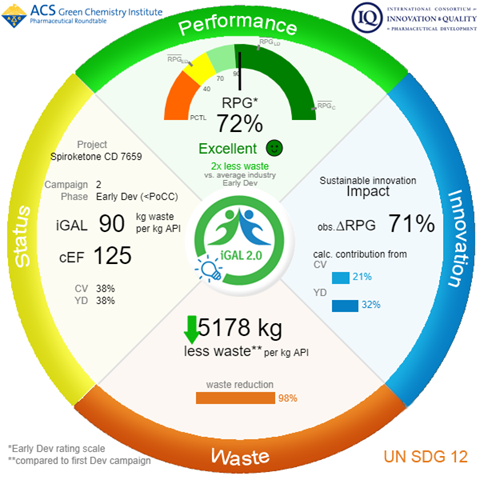
The Boehringer Ingelheim team—Yongda Zhang, Eugene Chong, Jada White, Suttipol Radomkit, Yibo Xu, Jon Lorenz, and Linglin Wu—was selected for their innovative work developing a short and eco-friendly manufacturing process for Spiroketone CD 7659—a common intermediate used in multiple projects within the company. The team’s new 3-step asymmetric synthesis route improved the yield nearly five-fold from 10 to 47 percent, reduced organic solvent usage by 99 percent, eliminated use of halogenated solvent, and reduced water usage by 76 percent. The sustainability achievements were further highlighted by a PMI of 117, 72 percent Relative Process Greenness (RPG) score, and an “excellent” innovation Green Aspiration Level (iGAL), placing it in the top 10 percent of industry processes. The team highlighted that their process can be scaled to meet and exceed a projected demand of more than 13 tons of the product which will result in saving more than 69,327,473 kg of waste compared to the initial process for one project.

Figure: This iGAL 2.0 scorecard shows the sustainability improvements of Boehringer Ingelheim’s new process for manufacturing Spiroketone CD 7659 over the incumbent process.

Image shows an iGAL 2.0 scorecard.

More about the Award

The Peter J. Dunn Award, established in 2016, recognizes outstanding industrial implementation of novel green chemistry and/or engineering in the pharmaceutical industry that demonstrates compelling environmental, safety, cost, and/or efficiency improvements over current technologies.

This annual award is presented at the Green Chemistry & Engineering Confernece where presenters are invited to share their innovations. 
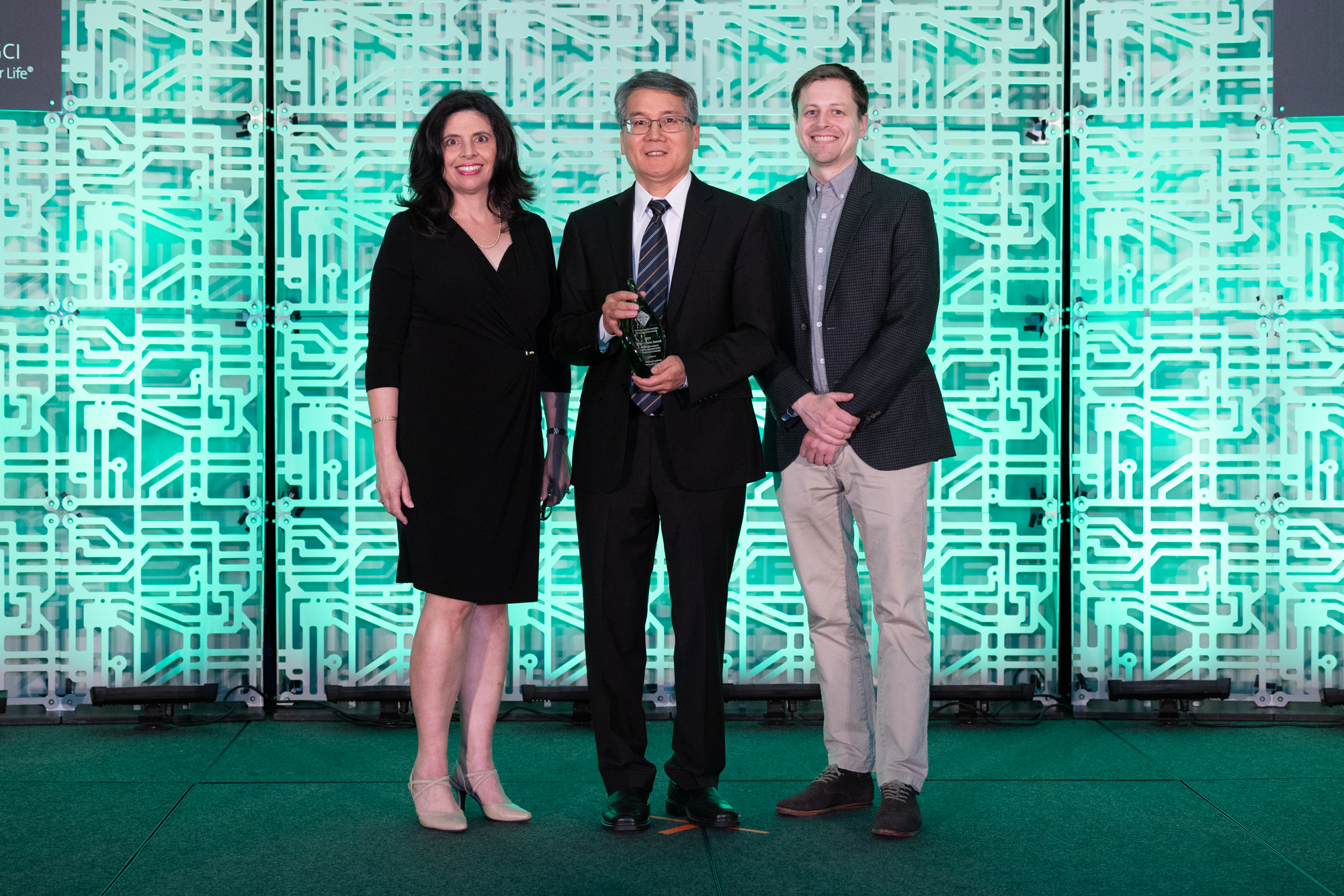
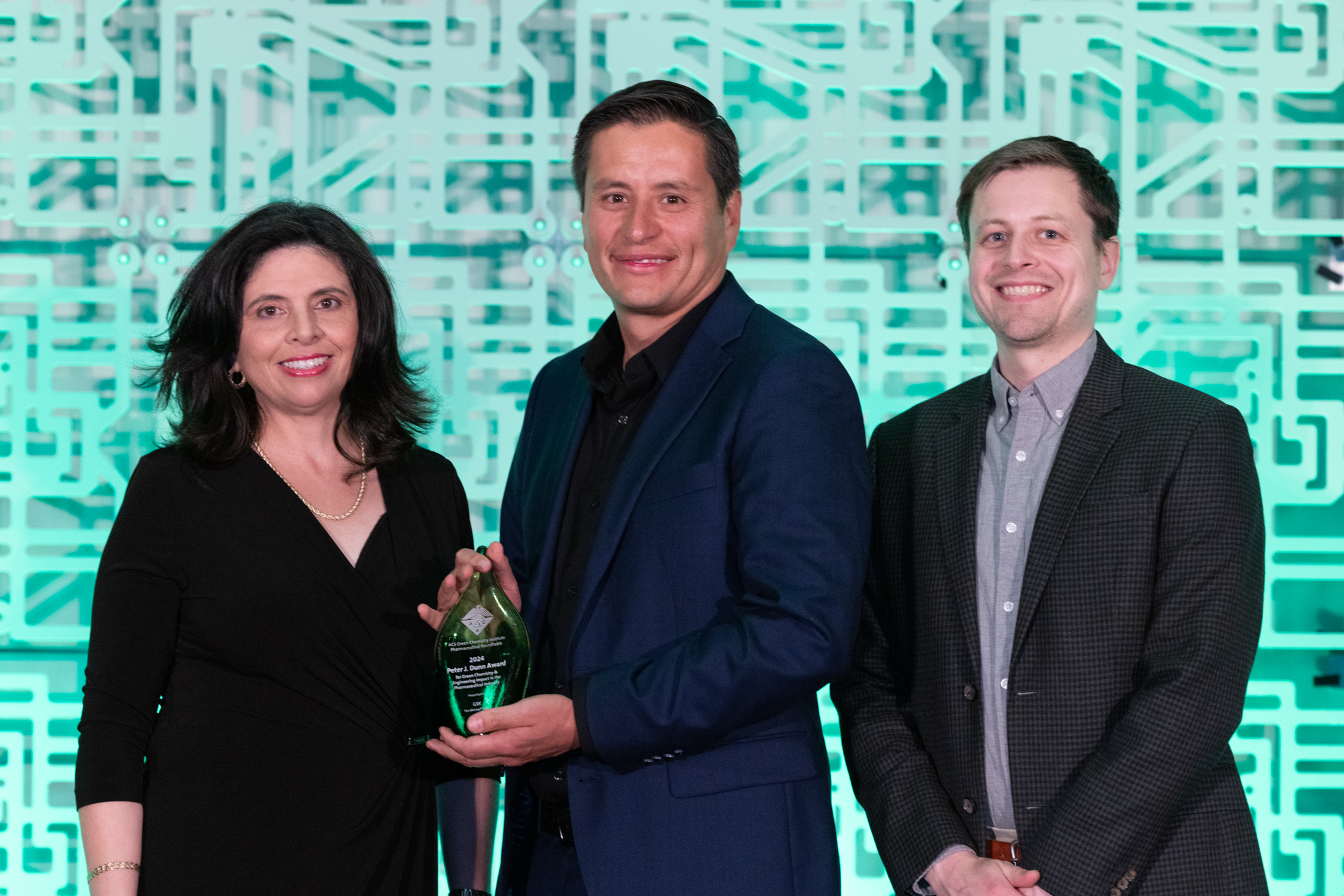
Pictured: Yongda Zhang, Distinguished Research Fellow at Boehringer Ingelheim, accepts 2024 Pete Dunn Award from Isamir Martinez (ACSGCI) and ACS GCIPR 2024 Co-Chair, Dan Bailey of Takeda.

Yongda Zhang receives Peter J. Dunn Award on behalf of Boehringer Ingelheim.

Continue reading

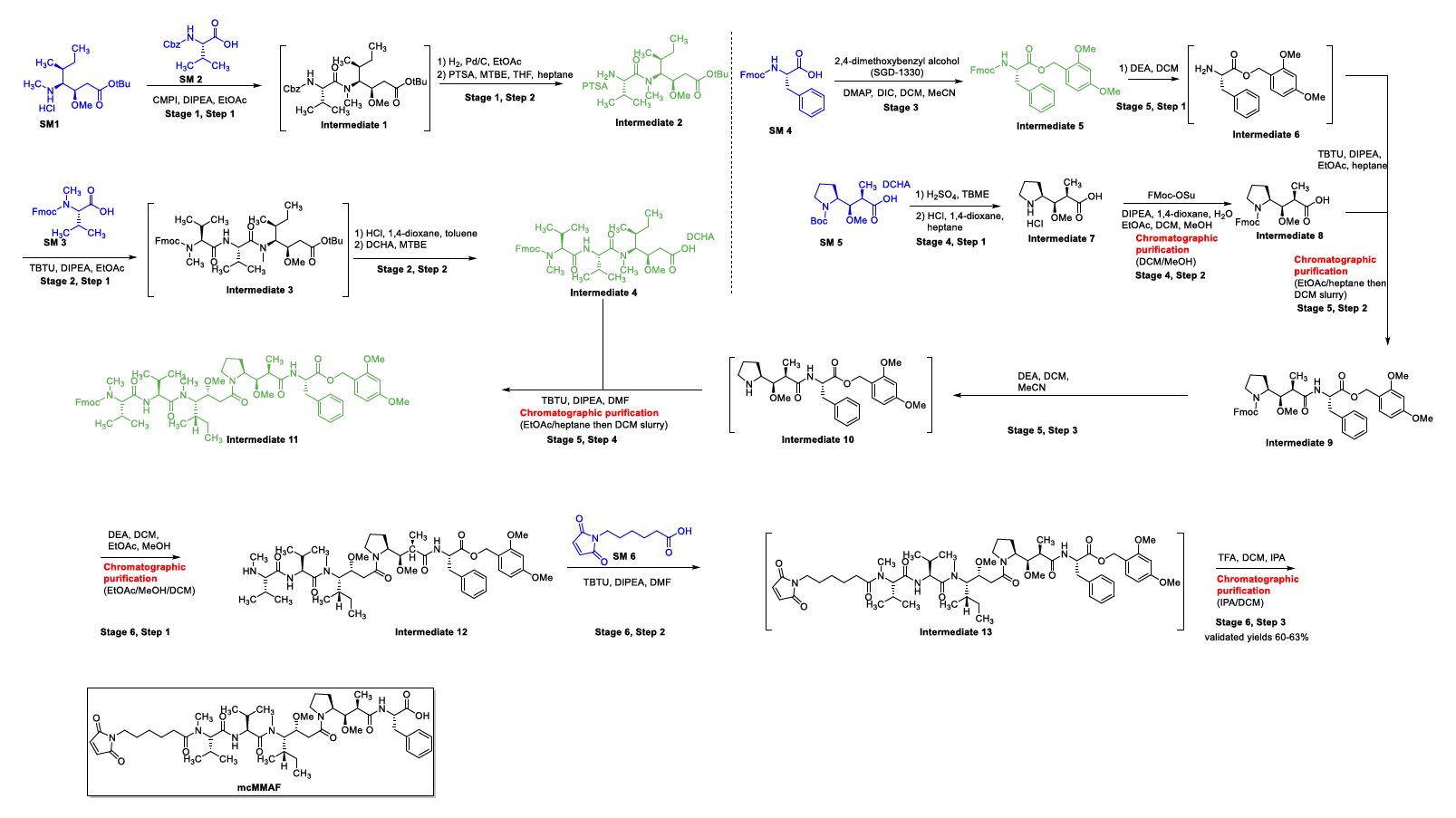
Development of a More Sustainable 2nd Generation Route to Peptide-Maleimidocaproyl MonoMethyl Auristatin F (mcMMAF)-the Cytotoxic Payload for Blenrep®, A Novel Antibody Conjugate Drug (ACD) for the Treatment of Multiple Myeloma

2024 Peter J. Dunn Award for Green Chemistry & Engineering Impact in the Pharmaceutical Industry

GSK’s winning submission demonstrated a more sustainable peptide manufacturing route for maleimidocaproyl monomethyl auristatin F (mcMMAF)—a drug used to treat multiple myeloma, a rare cancer affecting plasma cells. GSK team members being recognized are Danny Mancheno, Ian Andrews, Qiaogong Su, Kenneth Arrington, Mark Mellinger, Gregory Gilmartin, Aleksey Karulin, Anthony Nocket, John Kowalski, John Woodard (Collegeville, Pa.), and Chris Thickitt (Stevenage, UK). The first-generation route had already been commercialized and filed with the FDA however, GSK determined a more efficient route was needed. The team took on this complex challenge and developed a 2nd generation route that reduced solvent consumption by 16,160 kgs for every kilogram, greenhouse gas emissions by 71 percent, and energy consumption by 76 percent. Additionally, the route eliminated all single-use silica gel chromatographic separations, achieving an overall 76 percent reduction in Process Mass Intensity (PMI).

First Generation Process to McMMAF

More about the Award

The Peter J. Dunn Award, established in 2016, recognizes outstanding industrial implementation of novel green chemistry and/or engineering in the pharmaceutical industry that demonstrates compelling environmental, safety, cost, and/or efficiency improvements over current technologies.

This annual award is presented at the Green Chemistry & Engineering Confernece where presenters are invited to share their innovations. 
Pictured: Danny E. Mancheno, Principal Investigator at GSK, accepts 2024 Pete Dunn Award from Isamir Martinez (ACSGCI) and ACS GCIPR 2024 Co-Chair, Dan Bailey of Takeda.

2024 Pete Dunn Award Winner - GSK

Continue reading

Sustainable Manufacturing of BMS-986278 Leveraging an ERED/KRED Biocatalytic Cascade

2023 Peter J. Dunn Award for Green Chemistry & Engineering Impact in the Pharmaceutical Industry

Bristol-Myers Squibb was awarded for the “Sustainable Manufacturing of BMS-986278 Leveraging an ERED/KRED Biocatalytic Cascade.” The BMS team’s work demonstrated the use of an ERED/KRED biocatalytic cascade to enable the efficient installation of two stereocenters on a cyclohexyl ring as well as other improvements leading to a reduced number of isolations, elimination of the use of halogenated solvents, reduction of overall Process Mass Intensity (PMI) by 86% from first to second generation, and reduction of projected raw material costs by 82%. BMS team members included Michael Smith, Yichen Tan, Candice Joe, David George, Michael Dummeldinger, Harshkumar Patel, Richard Fox, Shane McKenna, and two Codexis colleagues,  Zara Seibel, and Stephan Jenne.

BMS sustainability metrics comparing the first and second generation routes.

More about the Award

The Peter J. Dunn Award, established in 2016, recognizes outstanding industrial implementation of novel green chemistry and/or engineering in the pharmaceutical industry that demonstrates compelling environmental, safety, cost, and/or efficiency improvements over current technologies.

This annual award is presented at the Green Chemistry & Engineering Conference where a member of the winning team is invited to share their team’s innovations. 

Pictured: Richard Fox, Scientific Director at BMS, accepts the 2023 Pete Dunn Award from ACS GCIPR 2023 Co-Chairs, Dan Bailey of Takeda (right) and Pippa Payne of Gilead (left). Also pictured is Zara Seibel, Senior Scientist at Codexis, part of the winning team.

BMS receives 2023 Pete Dunn Award

Continue reading

From wood pulp to a candidate medicine: Green manufacturing technologies enable the production of investigational leukemia drug nemtabrutinib from a biorenewable commodity material

2022 Peter J. Dunn Award for Green Chemistry & Engineering Impact in the Pharmaceutical Industry

A team from Merck in Rahway, NJ is the recipient of the 2022 Peter J. Dunn Award for Green Chemistry and Engineering Impact in the Pharmaceutical Industry. Merck team members receiving the award are Karla Camacho Soto, Mike DiMaso, Jacob Forstater, Nadine Kuhl, Reed Larson, Chris Prier, and Ben Turnbull. 

The initial manufacturing process for nemtabrutinib—acquired through the purchase of ArQule, Inc.—relied on an 11-step synthesis. The Merck team was able to reduce this to two steps. They were also able to replace toxic solvents with biorenewable Cyrene, avoid a highly energy-intensive transformation, and employ catalysis to improve efficiency. Three new technologies were employed to contribute to the sustainability of the process: biocatalysis, enzyme immobilization, and continuous manufacturing in a packed-bed reactor. Merck estimates that the new process reduces energy utilization 70%, as well as seeing a 70% reduction in both carbon dioxide and wastewater generation.

“The development and deployment of enabling technologies that support the most robust long-term supply of our medicines and vaccines is a primary goal of our process research and development team, and we are confident that biocatalysis will continue to grow as a key driver of efficient manufacturing processes,” says L.-C. Campeau, Associate Vice President and the Head of Small Molecule Process Research & Development at Merck.

MK-1026 chemical manufacturing process

Figure 1. New MK-1026 chemical manufacturing process.

More about the Award

The Peter J. Dunn Award, established in 2016, recognizes outstanding industrial implementation of novel green chemistry and/or engineering in the pharmaceutical industry that demonstrates compelling environmental, safety, cost, and/or efficiency improvements over current technologies.

This annual award is presented at the Green Chemistry & Engineering Conference, where representatives of the winning team are invited to share their team’s innovations. 

Pictured: Chris Prier and Reed Larson, Associate Principal Scientists at Merck, accept the 2022 Pete Dunn Award from David Constable and Isamir Martinez (ACSGCI) and ACS GCIPR 2022 Co-Chair, Pippa Payne of Gilead.

Merck receives 2022 Peter Dunn Award

Continue reading