Recombinant DNA technology and chimeric protein expression for sustainable production of therapeutic peptides by microbial fermentation

2025 CMO Excellence in Green Chemistry Award

Olon S.p.A is awarded on their innovative work, “Recombinant DNA technology and chimeric protein expression for sustainable production of therapeutic peptides by microbial fermentation.” Leveraging their expertise in microbial fermentation, Olon S.p.A. has developed a flexible manufacturing platform for the synthesis of peptide therapeutics. This novel technology synthesizes peptides using microbial fermentation (rDNA expression), leading to reduced solvent and toxic material usage, as well as minimizing excess building blocks by using no protecting groups. This improves the overall PMI compared to the existing Solid Phase Peptide Synthesis (SPPS) methods. Moreover, as part of their platform, a Master Cell Bank (MCB) significantly reduces the lead time for manufacturing since the cells can be logarithmically proliferated to maximize the yield of desired product in the fermenter. They are adapting their novel Fermentation Platform towards commercial GLP-1 peptides and non-GLP-1 peptides. Olon’s novel Fermentation Platform can help address the growing global demand for peptide therapeutics while employing the principles of green chemistry. The team consists of Piera Fonte, Gian Luca Bertetti, Antonella Malcangi, Alberto Oppedisano, Mattia Stucchi, Marianna Lembo, Guido Trione, Eleonora Amante, Giuseppe Borrelli, and Giuseppe Ferrante.

Olon

More about the Award

The CMO Excellence in Green Chemistry Award seeks to recognize outstanding efforts by CMO companies in pharmaceutical green chemistry in support of pharmaceutical research, development and manufacturing that demonstrate compelling environmental, safety and/or efficiency improvements.

This annual award is presented at the Green Chemistry & Engineering Confernece where presenters are invited to share their innovations. 

Continue reading

From Bottleneck to Breakthrough: Developing a Sustainable and Scalable Manufacturing Process for a Complex ADC Drug-Linker

2025 Peter J. Dunn Award for Green Chemistry & Engineering Impact in the Pharmaceutical Industry

The Merck team, consisting of Patrick Fier, Patrick Moon, Scott McCann, Tao Liang, Greg Estrada, Marc Poirier, Reed Larson, Lu Wang, Gao Shang, and Fuh-Rong Tsay, received this award for their work, “From Bottleneck to Breakthrough: Developing a Sustainable and Scalable Manufacturing Process for a Complex ADC Drug-Linker”. They demonstrated the impact of applying green chemistry principles in the manufacturing process of the linker for the antibody-drug conjugate (ADC) Sacituzumab tirumotecan (MK-2870). Originally, the manufacturing process had long lead times due to the 20-step synthetic sequence and faced a major bottleneck with the final purification that limited production to less than 100 g per month even with 24/7 operation in a high-potency chromatography suite. Major improvements were achieved by developing a synthesis from a widely available natural product that cut seven potent steps down to three. The Process Mass Intensity (PMI) was reduced by approximately 75%, and the amount of energy-intensive chromatography time was decreased by >99% compared to the original route. This work highlights the advantages of investing in greener and more sustainable processes that naturally improve the global supply of medicines to patients.

Merck

More about the Award

The Peter J. Dunn Award, established in 2016, recognizes outstanding industrial implementation of novel green chemistry and/or engineering in the pharmaceutical industry that demonstrates compelling environmental, safety, cost, and/or efficiency improvements over current technologies.

This annual award is presented at the Green Chemistry & Engineering Conference, where presenters are invited to share their innovations. 

Continue reading

A Sustainably-Designed Manufacturing Process to Adavelt™ Active from Renewable Feedstocks.

2025 Peter J. Dunn Award for Green Chemistry & Engineering Impact in the Pharmaceutical Industry

Corteva

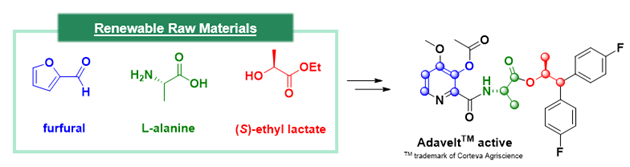
Corteva’s winning submission “A Sustainably-Designed Manufacturing Process to Adavelt™ Active from Renewable Feedstocks.” The Corteva team demonstrated the design of an efficient manufacturing process for Adavelt™ active, with sustainability as a core focus. They adopted green chemistry principles to maximize yield, reduce waste, and deliver a cost-effective solution for farmers. Building upon the first-generation supply route, they developed a process that eliminated three protecting groups, four steps, the use of precious metals, and replaced undesirable reagents with greener alternatives while producing an active ingredient effective against 20 diseases in over 30 crops.

More about the Award

The Peter J. Dunn Award, established in 2016, recognizes outstanding industrial implementation of novel green chemistry and/or engineering in the pharmaceutical industry that demonstrates compelling environmental, safety, cost, and/or efficiency improvements over current technologies.

This annual award is presented at the Green Chemistry & Engineering Conference, where presenters are invited to share their innovations. 

Continue reading

Walk-Up Automated Reaction Profiling (WARP) System: A Tool for Reaction Monitoring Designed for Discovery Chemists

2025 Green Discovery Chemistry Award

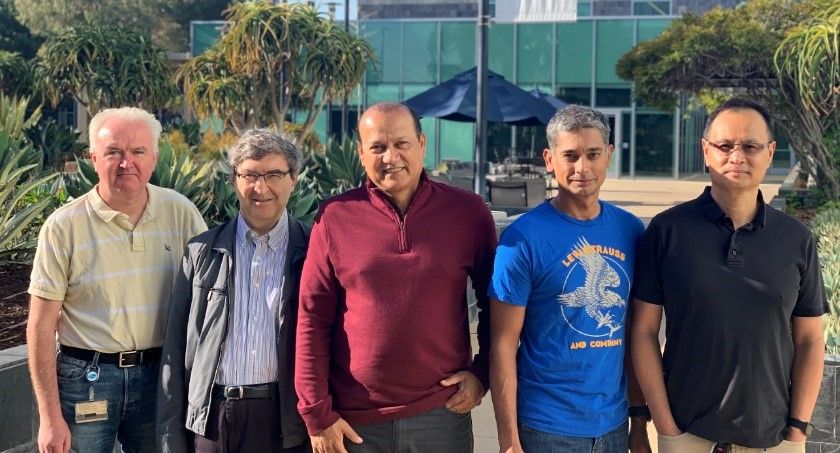
The Pfizer team has been awarded the inaugural prize for their submission, “Walk-Up Automated Reaction Profiling (WARP) System: A Tool for Reaction Monitoring Designed for Discovery Chemists.” The WARP system emphasizes waste reduction and minimizing exposure to hazardous substances. The technology provides a useful and versatile profiling tool for challenging reactions and is capable of improving reaction yields, shortening reaction times, and enhancing efficiency in various chemical processes while also reducing environmental impact. It features a simple user interface system to allow open-access use, offering a wide range of options for chemists and expanding the reach of the green chemistry technologies. The winning team consists of Muhammad Alimuddin, John Braganza, Paul Richardson, Wei Wang, and Alex Yanovsky, pictured below.

Continue reading

Sustainable Manufacturing Process for Commercial and Developmental Stage Intermediates through Two Consecutive Flow Reactions using Micro-packed Bed Technology

2024 CMO Excellence in Green Chemistry Award

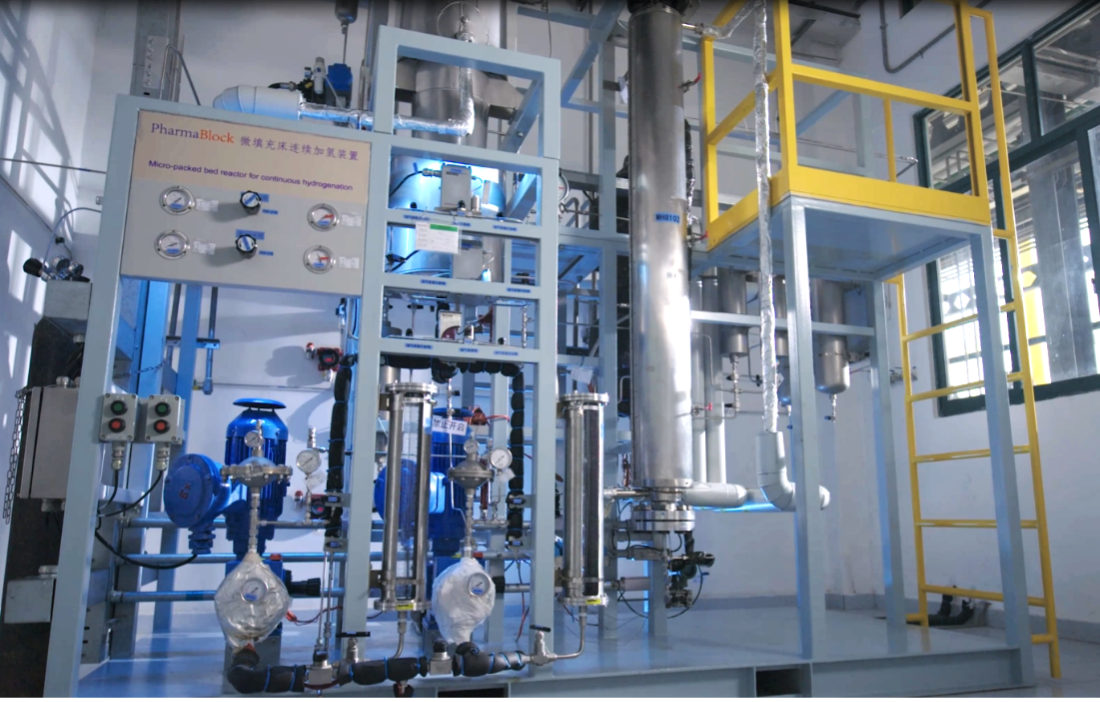
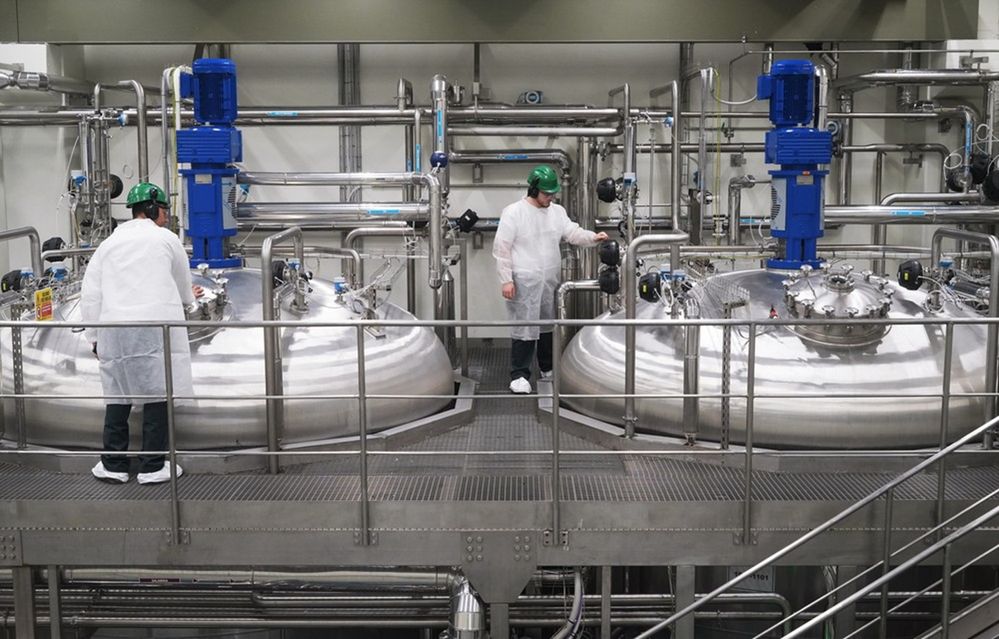
The PharmaBlock team was selected based on their innovative work on “Sustainable Manufacturing Process for Commercial and Developmental Stage Intermediates through Two Consecutive Flow Reactions using Micro-Packed Bed Technology.” Team members are Feng Zhang, Guangchao Ma, Dafen Wen, Yang Zhu, and Yuanxian Wang, all based in Nanjing, China. Their project demonstrated the use of micro-packed bed technology to produce tert-Butyl 3-oxoazetidine-1-carboxylate and tert-Butyl 3-aminoazetidine-1-carboxylate through oxidation reactions and reductive amination reactions at scale, resulting in improvements to safety, equipment volume efficiency, process mass intensity (PMI), greenness, and cost efficiency.

Pharmablock reactor equipment.

More about the Award

The CMO Excellence in Green Chemistry Award seeks to recognize outstanding efforts by CMO companies in pharmaceutical green chemistry in support of pharmaceutical research, development, and manufacturing that demonstrate compelling environmental, safety, and/or efficiency improvements. The award recognizes greener advances in synthetic route development for starting materials, intermediates, or active pharmaceutical ingredients (APIs), including reaction conditions and chemical or manufacturing technologies.

This annual award is presented at the Green Chemistry & Engineering Conference where a member of the winning team is invited to share their team’s innovations. 

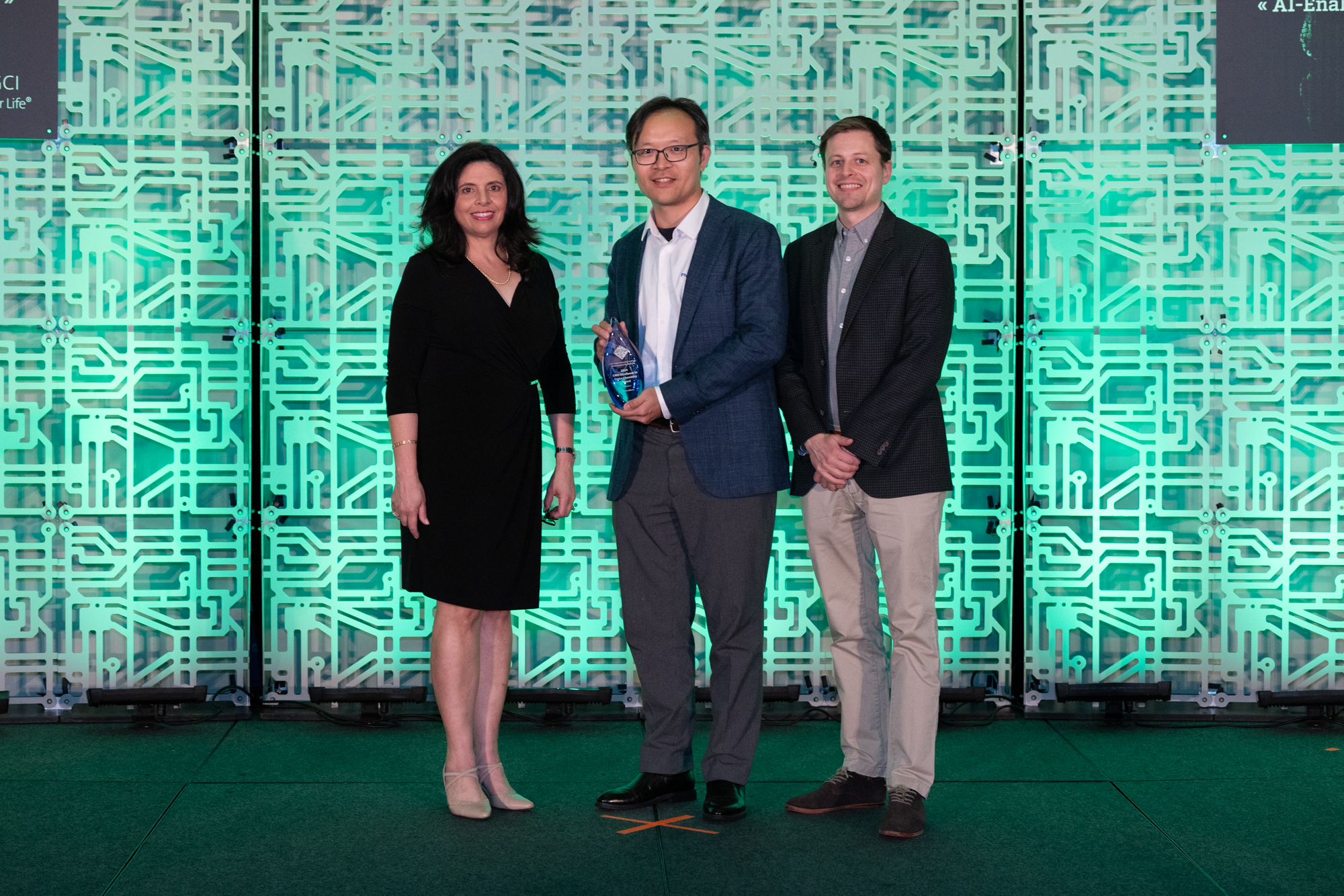
Pictured: Wang Yuanxian, Director of R&D at PharmaBlock, accepts the 2024 CMO Excellence in Green Chemistry Award from Isamir Martinez (ACSGCI) and ACS GCIPR 2024 Co-Chair, Dan Bailey of Takeda.

PharmaBlock accepts award.

Continue reading

PMI Prediction and Bayesian Optimization: Two Tools with One Goal Towards the Development of ‘Greener-by-Design’ Synthesis of APIs

2024 Data Science & Modeling for Green Chemistry Award

The Bristol Myers Squibb team received the innaugral Data Sciences and Modeling Award for Green Chemistry award. 

Richard Fox, Jun Li, Jacob Albrecht, Jason Stevens, Jose Tabora, Alina Borovika, and Benjamin Shields (BMS) partnered with Jose Garido (Princeton), Professor Ryan Adams (Princeton), and Professor Abigail Doyle (UCLA) to showcase two tools that are combined to arrive at greener processes during the design, development, and optimization of synthetic transformations. A process mass intensity (PMI) prediction app that utilizes predictive analytics and historical data of large-scale syntheses to help enable better decision-making during ideation and route design was coupled with a subsequent Experimental Design via Bayesian optimization application (i.e., EDBO/EDBO+) to accelerate the optimization of the subsequent individual chemical transformations was included. Taken together, these two tools enable process scientists to incorporate state-of-the-art open-access data science tools and algorithms into both defining their overall project strategies and conducting their daily laboratory experimentation to accelerate the advancement of “greener-by-design” outcomes.

Highlighting a real clinical candidate, the authors illustrated a quantitative method for the prediction of potential efficiencies centered around Process Mass Intensity (PMI) of proposed synthetic routes prior to their evaluation in a laboratory. This allows scientists to select the most efficient option prior to development and arrive at a holistically more sustainable chemical synthesis to a molecule moving into manufacturing. Following predictions for PMI across different synthetic sequences, the researchers rapidly identify the optimized conditions for a particular transformation using a machine learning Bayesian optimization (BO)n approach to explore chemical space and identify more sustainable reaction conditions with fewer experiments and resources. For the specific example included in their work, a process that yielded 70% yield and 91%ee through traditional one factor at a time (OFAT) using 500 experiments, was surpassed by the EDBO+ platform, providing 80% yield and 91%ee in only 24 experiments. Both technology platforms are open source and available for researchers at no charge, increasing the potential for adoption and use by others.

More about the Award

The Data Science and Modeling for Green Chemistry award recognizes innovation or excellence in the research and development of computational tools that empower users to effectively design, implement, and evaluate green processes with reduced process mass intensity, waste, health and safety impact, and other aspirational improvements. The award was open to both academic and industrial applicants, and a number of excellent nominations were received for consideration. 

This annual award is presented at the Green Chemistry & Engineering Confernece where presenters are invited to share their innovations. 
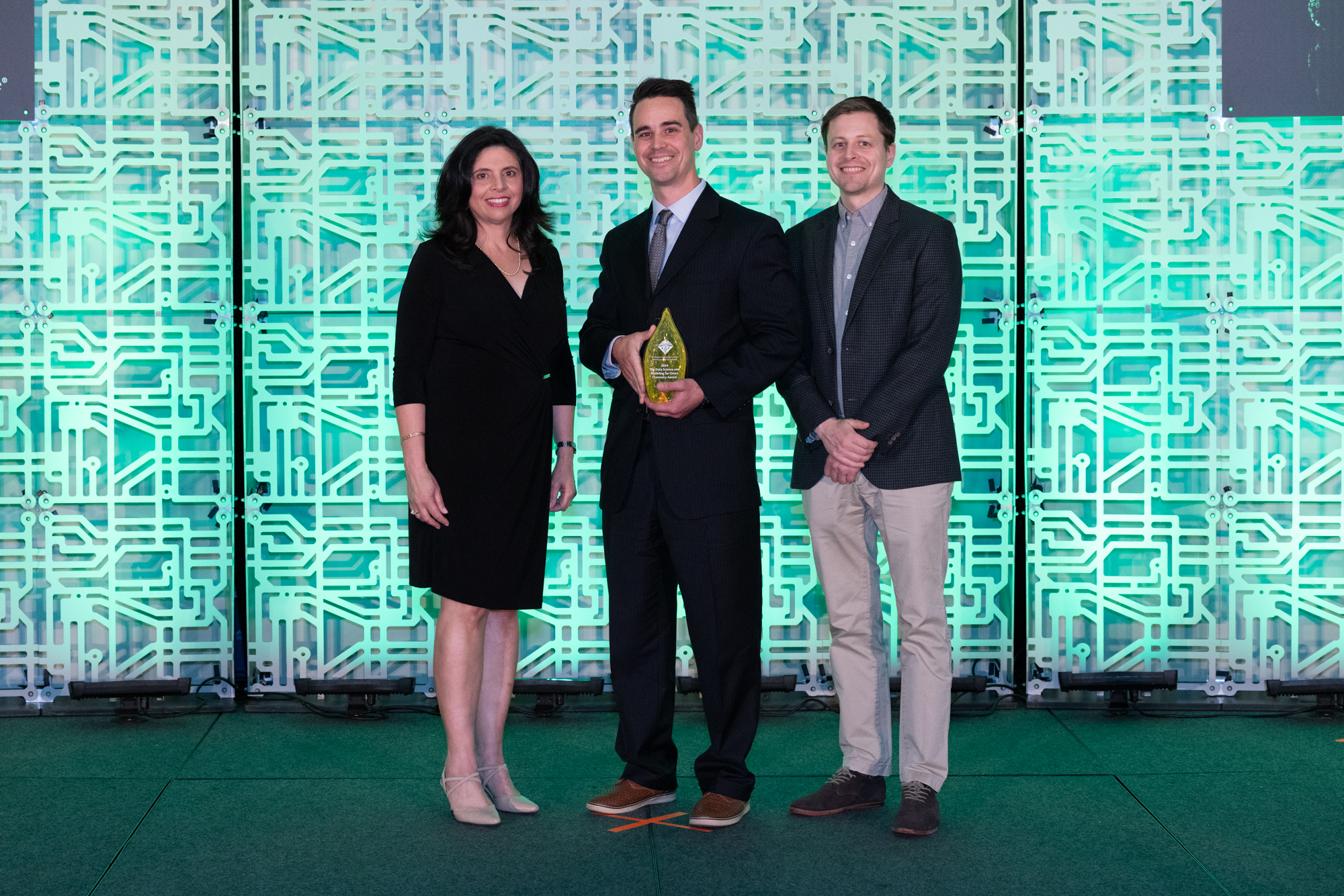
Pictured: Jason Stevens, Associate Scientific Director at BMS, accepts 2024 Pete Dunn Award from Isamir Martinez (ACSGCI) and ACS GCIPR 2024 Co-Chair, Dan Bailey of Takeda.

BMS accepts Data Science & Modeling for Green Chemistry award

Continue reading