Author: Christiana Briddell

GChELP: A Vital Resource for Teaching Practical Green Chemistry in Industry and Academia

GChELP: A Vital Resource for Teaching Practical Green Chemistry in Industry and Academia. Isamir Martinez*, Alan Steven*, Nicholas Babij, Ashley E. Baker, Christiana Briddell, Naoko Ichiishi, Shazia Keily, Andrew Kennedy, Rebecca Newton, Paul F. Richardson, Helen F. Sneddon, and Adelina Voutchkova-Kostal. ACS Sustainable Chem. Eng. 2025, 13, 27, 10259–10267. https://doi.org/10.1021/acssuschemeng.5c00379.

Environmental Sustainability Strategy of Active Pharmaceutical Ingredient Manufacturing

Environmental Sustainability Strategy of Active Pharmaceutical Ingredient Manufacturing: A Perspective from the American Chemical Society Green Chemistry Institute Pharmaceutical Roundtable. Juan Colberg*, John L. Tucker, Isamir Martínez, J. Daniel Bailey, Christiana Briddell, Stefan G. Koenig, Michael E. Kopach, Sharon Michalak, Astrid Parsons, Paul F. Richardson, Frank Roschangar, Eva Vestergaard, and Adelina Voutchkova-Kostal. ACS Sustainable Chem. Eng. 2025, 13, 27, 10268–10284. https://doi.org/10.1021/acssuschemeng.5c01094.

The Evolving Landscape of Industrial Biocatalysis in Perspective from the ACS Green Chemistry Institute Pharmaceutical Roundtable

The Evolving Landscape of Industrial Biocatalysis in Perspective from the ACS Green Chemistry Institute Pharmaceutical Roundtable. Francesco Falcioni*, Luke Humphreys*, Richard C. Lloyd*, Hao Wu, Isamir Martinez, Jonathan Jones, Shane McKenna, Katharina Neufeld, Ryan M. Phelan, Tay Rosenthal, Christophe J. Szczepaniak, Kumiko Yamamoto, Scott P. France, and Anna Fryszkowska. ACS Catal. 2025, 15, 12, 10780–10794. https://doi.org/10.1021/acscatal.5c01646.

Green Chemistry Using Smarter Metrics: A Life Cycle Approach

Chemists and chemical engineers hold immense power to reduce environmental impact through the choices they make, especially when selecting synthetic routes. But how can they be sure they’re making the greener choice?

The ACS GCI Pharmaceutical Roundtable has developed robust metrics to advance decision making in development of greener synthetic processes, not just for the pharmaceutical sector, but in academic research and in other industries as well. Join David Entwistle of Codexis and Benjamin Küehne of Merck, KGaA (Germany) as they discuss the importance of metrics in driving process development and discover how these tools are helping chemists make faster, smarter, and more sustainable decisions. Register now to gain practical insights through real-world case studies and learn how to elevate your process development with powerful sustainability tools like the new Process Mass Intensity (PMI) Life Cycle Assessment (LCA) Tool.

This ACS Webinar is moderated by Adelina Voutchkova-Kostal of the American Chemical Society and co-produced with the ACS GCI Pharmaceutical Roundtable.

Watch the Webinar

Webinar graphic showing excel spreadsheet overlayed with sustainability icons

Continue reading

Green Chemistry Articles of Interest to the Pharmaceutical Industry – May 2025

Green Chemistry Articles of Interest to the Pharmaceutical Industry

Melissa A. Ashley, Miles H. Aukland, Marian C. Bryan*, Megan A. Cismesia, Theresa Dutschei, Oliver D. Engl, Pascal S. Engl, Álvaro Enríquez García, Alejandro Gimenez Molina, Vanessa Harawa, George Karageorgis, Shazia Keily, Christopher B. Kelly, Alexandre Leclair, Johnny W. Lee, Wei Li, Matthew Osborne, Jan Pawlas, Paul F. Richardson, Samuel C. Scott, Alan Steven*, Balaram S. Takale, Mingshuo Zeng. Org. Process Res. Dev. 2025, 29, 6, 1361–1372. https://doi.org/10.1021/acs.oprd.5c00050

Walk-Up Automated Reaction Profiling (WARP) System: A Tool for Reaction Monitoring Designed for Discovery Chemists

2025 Green Discovery Chemistry Award

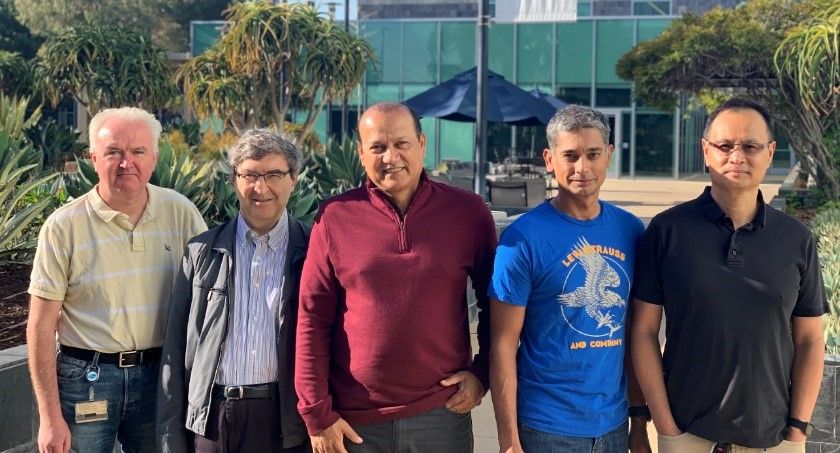
The Pfizer team has been awarded the inaugural prize for their submission, “Walk-Up Automated Reaction Profiling (WARP) System: A Tool for Reaction Monitoring Designed for Discovery Chemists.” The WARP system emphasizes waste reduction and minimizing exposure to hazardous substances. The technology provides a useful and versatile profiling tool for challenging reactions and is capable of improving reaction yields, shortening reaction times, and enhancing efficiency in various chemical processes while also reducing environmental impact. It features a simple user interface system to allow open-access use, offering a wide range of options for chemists and expanding the reach of the green chemistry technologies. The winning team consists of Muhammad Alimuddin, John Braganza, Paul Richardson, Wei Wang, and Alex Yanovsky, pictured below.

Continue reading