Name
Scheme
Key info
Cofactor:
RED = multiple enzymes, or rarely used
GREEN = commonly used, no second enzyme
BLUE = not required, no additional enzyme
required
Substrate scope:
GREEN (broad scope) to YELLOW (specific)
Most commonly used biocatalytical transformations
≥2 Peer reviewed examples of reactions scaled to ≥ 1 kg, or multiple double digit gram. Enzymes available at > 100 g scale
Hydrolase
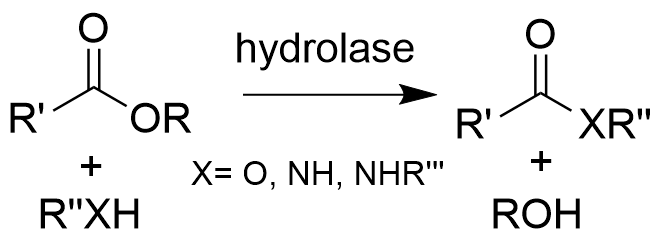
R, R’, R” can be asymm centers, often used for kinetic resolutions and desymmetrizations. When immobilized can tolerate organic solvents.
Ketoreductase
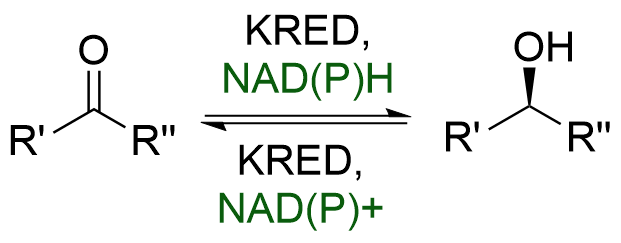
R- and S-selectivities available. Dynamic kinetic resolutions possible within R’ and R” groups. Eqm usually favors alcohol product. Can run in oxidative direction.
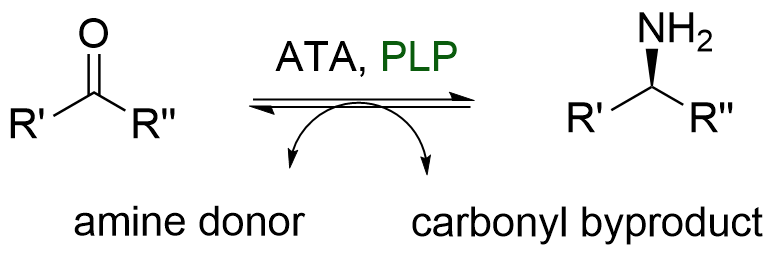
Transaminase
Iminereductase
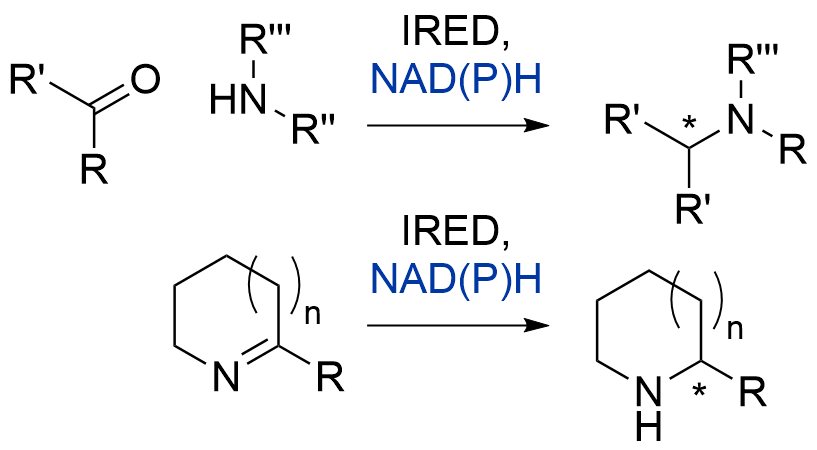
Asymmetric intermolecular reductive amination with IRED and RedAm. Some IRED only acitive on preformed imines
Enereductase
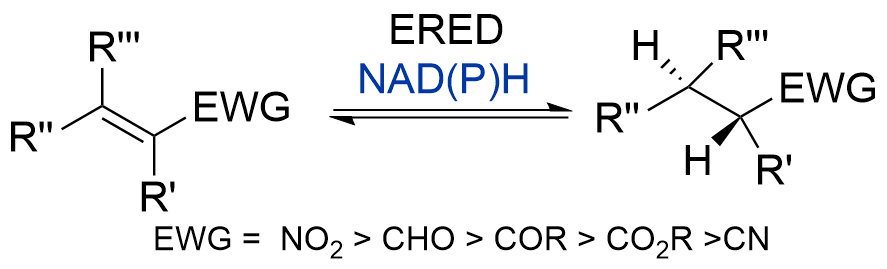
Trans reduction of the alkene. Selectivity can be engineered, steric crowding generally poorly tolerated. Eqm requires driving
Nitrilase
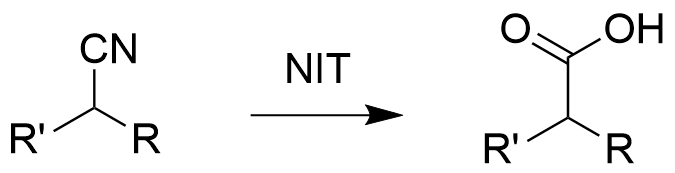
Irreversible conversion of nitrile to acid (enzymes that convert nitrile to amide are nitrile hydratases).Used in kinetic resolutions or chemoselective hydrolysis of one nitrile over another.
Aldolase
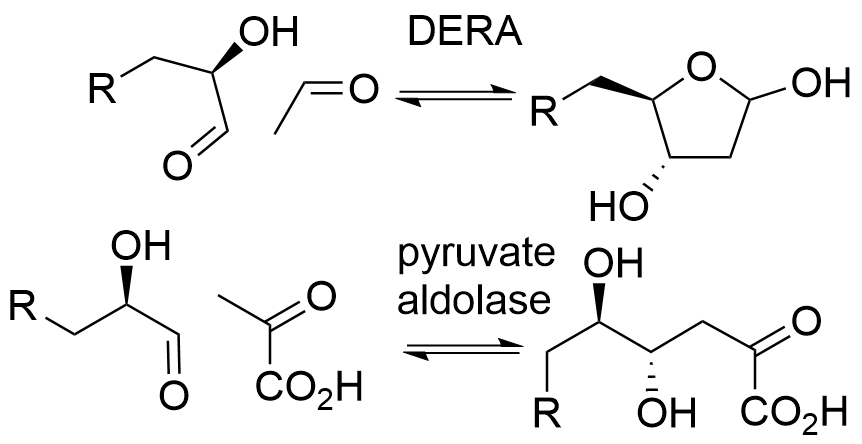
Several classes of aldolase, e.g.DERA (deoxyribose aldolase), others such as pyruvate and fructose aldolase also known.
Amino acid dehydrogenase
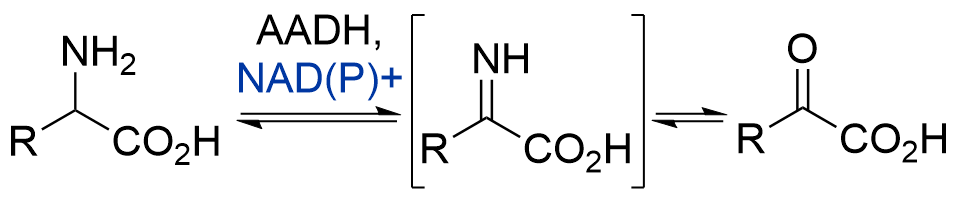
Most commonly used in the ‘reverse’ direction to form novel amino acids. R and S selective enzymes available. Deracemization of amines when coupled to compatible chemical reductant.
aKG dependent dioxygenase
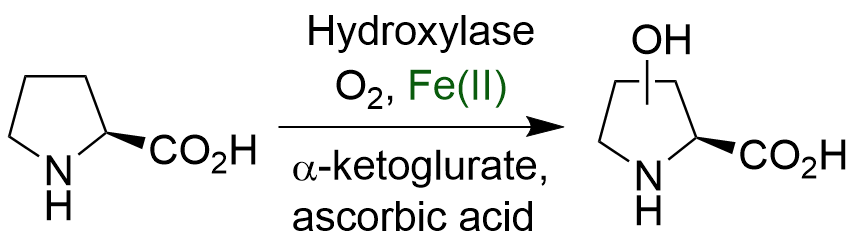
Non-heme Fe(II)- and a-ketoglutaratedependent enzymes using O as oxidant. Ascorbic acid generally required. Enzymes available for regio- and stereoselective hydroxylation of cyclic as well as acyclic amino acids. Non-amino acids can also be substrates.
Ammonia lyase
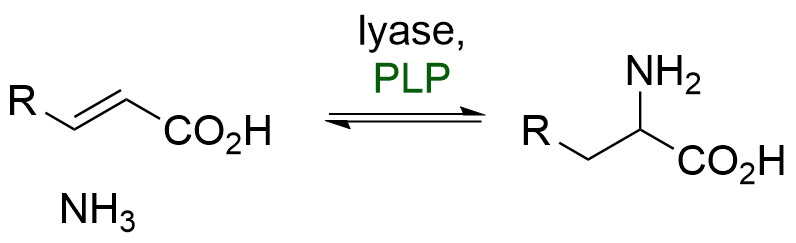
PAL phenylalanine ammonia lyase, TAL tyrosine ammonia lyase most commonly used but others available. Used in the amino acid forming direction with very high ammonia concentrations to drive equilibrium.
Baeyer-Villiger monooxygenase
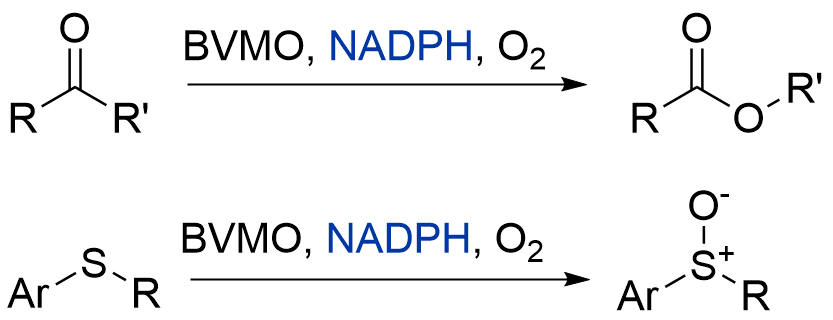
Asymmetric BV reaction, asymmetric sulfide oxidation to sulfoxide.
≥ 2 Peer reviewed examples of reactions scaled to ≥ 10 g
Hydroxynitrile lyase
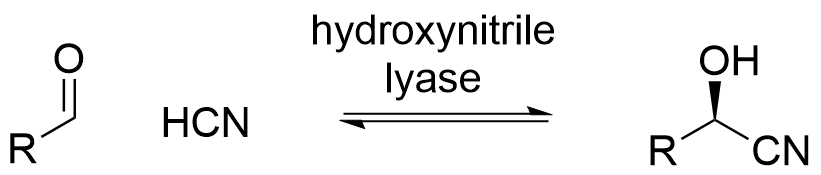
Catalyze the formation and hydrolysis of a-hydroxy nitriles from/to aldehydes and cyanide. Used in a commercial approach to mandelic acid.
Nitrile hydratase
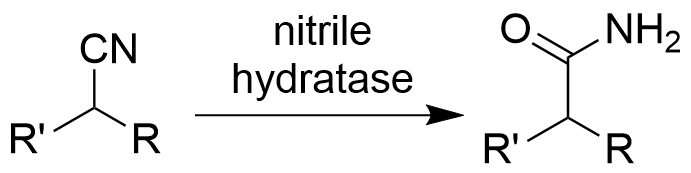
Irreversible conversion of nitrile to amide (enzymes that convert nitrile to acid are nitrilases). Kinetic or dyamic resolution possible with enolisable proton.
Epoxide hydrolase
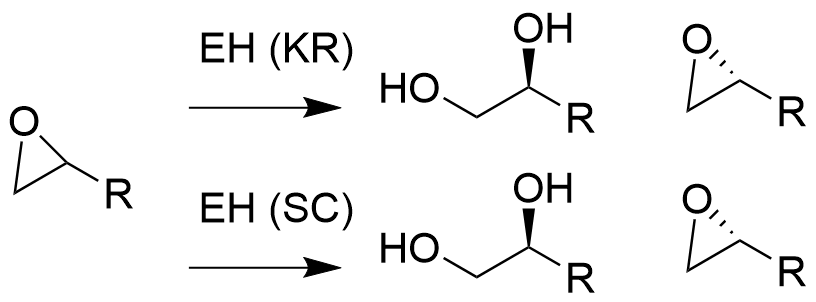
Irreversible conversion of epoxide to diol. Mostly used for kinetic resolution (KR). Some EHs are stereoconvergent (SC), ie convert a racemic epoxide to single enantiomer diol. Different mechanistic classes exist.
Monoamine oxidase
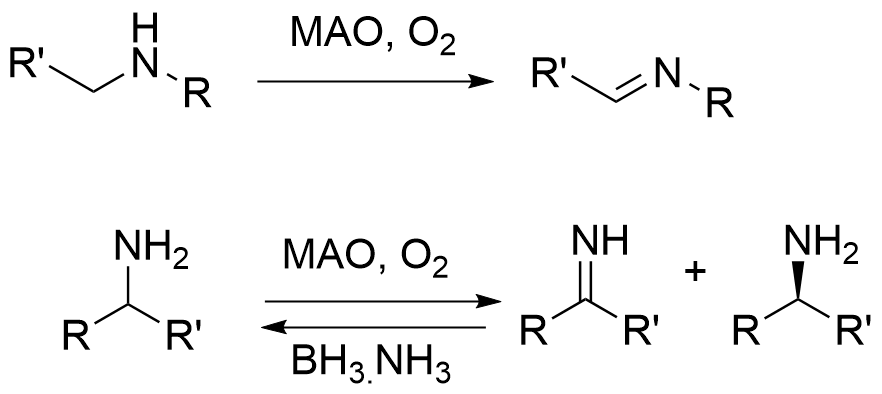
Desymmetrization of pyrrolidines, and trap of imine. Primary amine oxidation. Deracemization of amines when coupled to compatible chemical reductant.
Alcohol oxidase
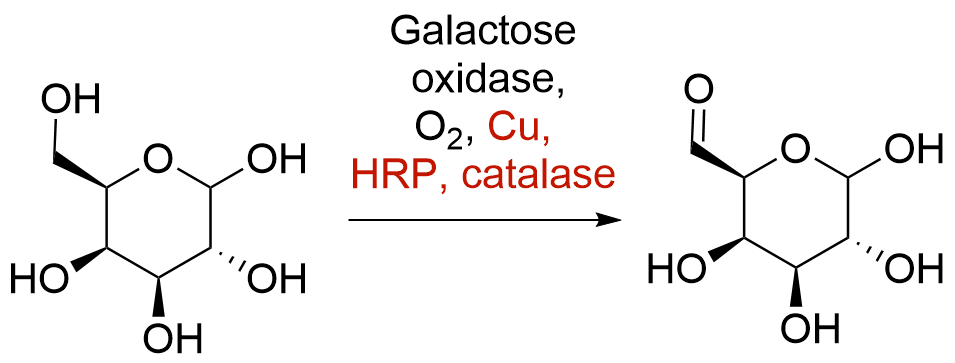
Many sub-types with different substrate selectivities.eg galactose oxidase (GO) acts on primary alcohols in polyols and benzylic alcohols. Kinetic resolutions possible. Oxygen mass transfer limited.
Halohydrin dehalogenase
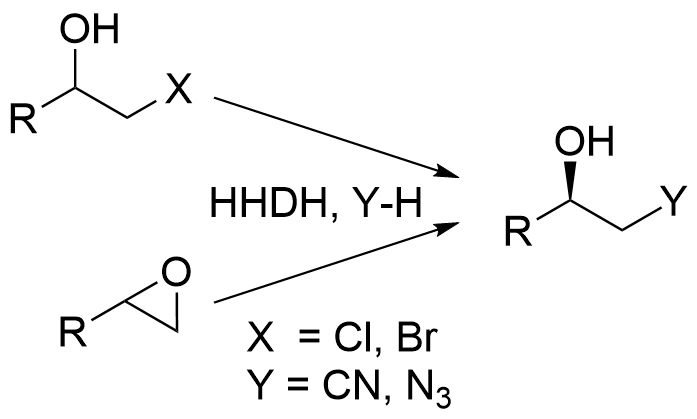
Catalyze the conversion of vicinal halohydrins to epoxides, as well as epoxide ring opening. Closely related to some epoxide hydrolases.
Unspecific peroxygenase
Fungal heme containing enzymes use hydrogen peroxide as oxidant and require no cofactors. They have varying oxidative capabilities including:
Hydroxylation, epoxidation, N- or S- oxidation, bromination, dealkylation
Tryptophan synthase
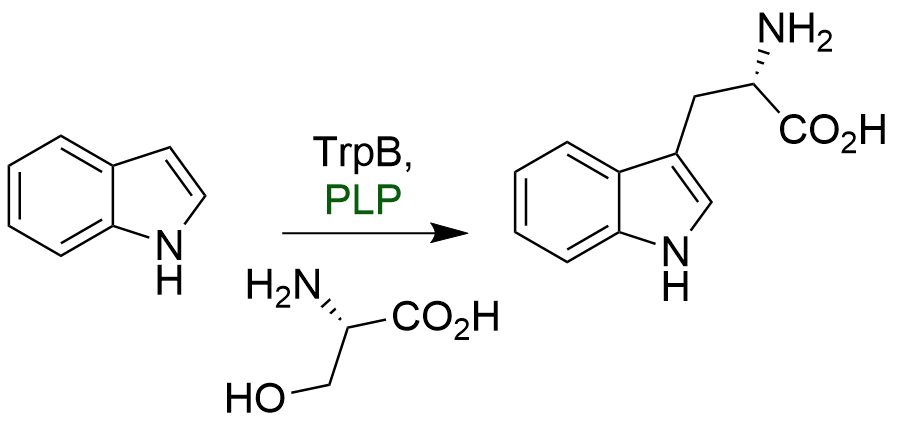
Native reaction forms L-tryptophan using PLP cofactor. Many non-canonical amino acids have been produced with engineered variants.
≥ 1 Peer reviewed example of reactions scaled to multi-mg
Carboxylic acid reductase
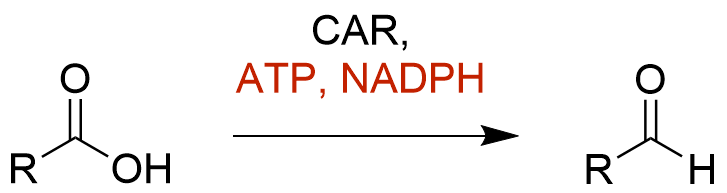
Multidomain enzyme that uses ATP to transform the carboxylic acid to a thioester, and then reduces the thioester to the aldehyde with NADPH.
Halogenase
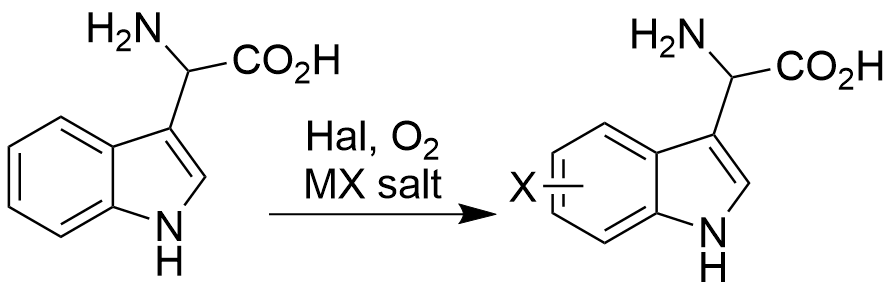
Halogenation of aromatic rings. Halogenation takes place via a halogenated lysine residue. Regiochemistry can be controlled via directed evolution of the enzyme.
Cytochrome P450
Heme containing enzyms using oxygen as oxidant.Requires electron transfer proteins either as part of the enzyme or added enzymes, often nicotinamide dependent. They have varying oxidative capabilities including:
Hydroxylation, desaturation, epoxidation, N- or S-oxidation, dealkylation
Amide ligase
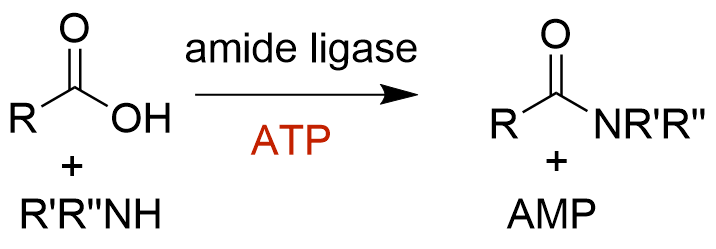
ATP dependent amide formation between acid and amine.
Nicotinamide cofactor recycling

Most commonly used reductive nicotinamide regenerating systems

Glucose dehydrogenase
Gluconic acid formation drops reaction pH, and may required the use of a pH stat. Highly active enzyme. Active on both NAD+ and NADP+.

Ketoreductase

Formate dehydrogenase
Less commonly used reductive nicotinamide regenerating systems
Phosphite dehydrogenase

Enereductase

NAD(P)H oxidase

For oxidative approaches
Irreversible conversion of reduced co-factor to oxidized cofactor in presence of O2. NADH or NADPH activity available. Sacrifical substrate approach (similar to KRED + IPA). Use unsaturated donor that can aromatize when oxidized.
Non-enzymatic methods
Electrochemical
Potentially the ‘greenest’ approach, still in development.
Photochemical
Still in development.
Non-abundant metal hydrogenation
Still in development, but questionable sustainability.
Adenosine triphosphate (ATP) recycling

Most commonly used ATP regenerating systems

Acetate kinase

Polyphosphate kinase

Phosphoenolpyruvate kinase

Adenylate kinase
Less commonly used ADP/ATP regenerating systems

Creatine phosphate kinase

Polyphosphate transferase
